Plamielle Kenmoe argues that President Biya’s rhetoric hides an “epidemic of hopelessness”.
By Plamielle Kenmoe
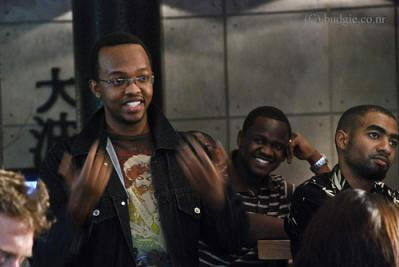
At the 3rd Ordinary CPDM Congress in Yaoundé, a few weeks before yesterday’s chaotic presidential election, Paul Biya defended the 29-year legacy of the ruling party in front of a generation of young Cameroonians. The Republic of Cameroon, he said, is moving from being a country of “great ambitions” to one of “great achievements”.
Biya argued that “much has been done, much has been accomplished despite the obstacles, despite the difficulties and despite several crises and their consequences”. The president added that Cameroonians should “be proud of the results obtained in these difficult conditions, for the good people of Cameroon”. This speech may have struck a false note for the thousands of young Cameroonians watching, many “hopeless, lost and without optimism for tomorrow”.
Urging fellow members of the party to be more attentive to the concerns of young people, Biya said: “We must restore hope to our youth; therefore, both in the process of renovating our party and in the management of public offices, we will encourage rejuvenation in leadership”. Then he added that: “giving a significant role to young people, is preparing them to take over.” Biya has stated that “the present and future of Cameroon rests on the youth” but there is very little evidence of effective policies that target young people. Indeed, the level of brain drain that Cameroon suffers from is clear evidence of the lack of effective policy for youth integration and development. Young people across Cameroon, facing a daily battle with despair, underemployment, unemployment and disillusionment, to the extent that their self-esteem is threatened are asking the question: Is this the present and the future that the Head of State is referring to?
This young generation has suffered from an epidemic of hopelessness but, even after yesterday’s disappointing polls, they cannot give up. While things may look challenging, this is an opportunity for the young generation of “sacrificed” Cameroonians to prevail in a reconstruction plan that will create a new dynamic.
Working with the few successes of the government and giving the youth the necessary means to revitalise themselves is the key. Any solution to this 29 year epidemic must begin with the belief that young people can change their country for the better. Youths must begin to believe that the government is not their enemy and they must begin to believe that there is hope for positive change. Conversely, the country of Cameroon must also begin to believe in the value of its young and creative minds.
Young people are as responsible for their future as the government is and to ensure the progressive integration of youth into public decisions, and to destroy the huge age gap between the “new generation” and the “older generation” of leaders; every Cameroonian should contribute in their own way to build a bridge for effective communication between the generations. Rapid technological, sociological and even political development can create misunderstandings. It is therefore imperative that efforts to increase mutual understanding are encouraged and that the needs of all, young and old, are conveyed appropriately. It is society that will ultimately suffer if a sense of intolerance and alienation continues to grow in the minds of young people
Cameroonian youth must innovate and create to ensure that they have a stake in the society of tomorrow. This is the cure for the ills of their country. They should stop reaching out to receive but rather start to give something back. That is the spirit of a population who care about the future of their country.
Archbishop Desmond Tutu argues that the people of Equatorial Guinea need justice, not a $3 million science prize funded by their president.
By Desmond Tutu
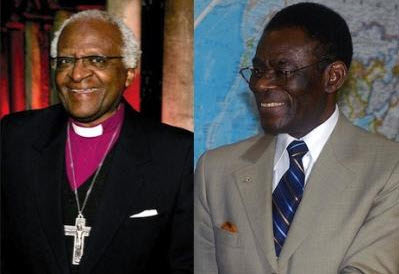
Archbishop Tutu (left); President Obiang (right)
Over the past year, the world has watched with great interest as the Arab Spring has dissolved decades of repression. Citizens weary of injustice have stood up and demanded control of their destinies. I wish that oppressed people everywhere in Africa could benefit from the dramatic changes we are witnessing in North Africa.
The people of Equatorial Guinea, for instance, an oil-rich country home to the continent’s longest-ruling leader, Teodoro Obiang Nguema Mbasogo, have endured decades of repression, and many remain mired in poverty despite the country’s considerable natural resource wealth. Torture, extrajudicial killings, arbitrary detentions, and harassment of journalists and civil society groups have been well documented by the United Nations and other sources.
Credible allegations of high-level corruption —including by President Obiang and his eldest son— are the subject of judiciary investigations around the world. Meanwhile, spending on education is very low, even compared with other African nations that are less blessed with natural resources than Equatorial Guinea.
In February, President Obiang’s government imposed a news blackout on the political protests in North Africa, and later denied its own citizens the right to hold peaceful demonstrations.
Despite this abysmal record, in 2008 UNESCO agreed to establish a science prize named for and funded by President Obiang aimed at “improving the quality of human life.” UNESCO suspended the prize in October 2010 after an overwhelming number of Equatoguineans, human rights groups, press freedom organizations, anti-corruption groups, public health professionals, prominent writers, and esteemed scientists from Africa and around the world voiced their outrage over the prize.
I myself, in solidarity with the people of Equatorial Guinea, joined in this effort. In a letter addressed to UNESCO in June 2010, I expressed my concern over the prize and noted that the UNESCO-Obiang prize’s $3 million endowment should be used to benefit the people of Equatorial Guinea —from whom these funds have been taken— rather than to glorify their president.
Now, less than one year later, as the 187th session of UNESCO’s executive board gets under way, the organization is considering revisiting its October 2010 decision to suspend the prize indefinitely. Earlier this month, a proposal to reinstate the prize was put forward in the name of the African Union, which President Obiang currently chairs. That request has been included on the UNESCO board’s meeting agenda and could be considered as early as September 29.
In numerous speeches to international audiences, including many in his role as the rotating AU chair, President Obiang has stated his commitment to democracy, human rights, and good governance. His words, however, ring hollow since they are often not applied inside his own country.
In his address this past week at the United Nations General Assembly, President Obiang advocated that democracy “must evolve in harmony” with a country’s local culture. Unfortunately, the citizens of Equatorial Guinea have never had a free and fair election through which they could choose their own destiny or shape a democracy according to their values.
While I welcome President Obiang’s decision to release 22 political prisoners in June 2011 during a ceremony to commemorate his birthday, we must remember that his country’s judiciary lacks independence and the rule of law is very weak and often violated. Just last year, the government of Equatorial Guinea executed four of its own citizens after kidnapping them from Benin, secretly holding them in detention without access to lawyers or their families, and denying them the right to appeal the court’s decision or even to contact family members before their deaths, which occurred less than one hour after the summary military trial concluded.
After his June 2010 speech at the Global Forum in Cape Town, South Africa, where President Obiang stated his commitment to a five-point program of transparency and political, legal, and economic reform, I encouraged him to follow through on his promises and offered to help in whatever way that I could.
Unfortunately, I find myself instead voicing continued objections to the UNESCO-Obiang prize.
It is unfortunate that the time and resources expended by President Obiang to establish the prize are not directed at implementing the reforms that he regularly mentions. President Obiang should focus his efforts on remaking Equatorial Guinea into an open, rights-respecting democracy fitting for these times.
As drought brings increasing instability to the region, the control of small arms becomes a problem of increasing urgency.
By Alasdair Reid
Turkana, Kenya:
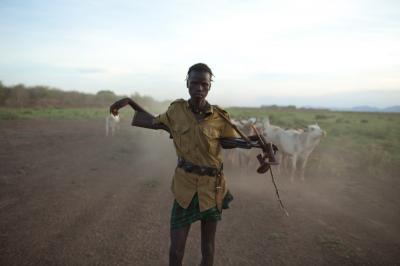
On a recent trip to Turkana in northern Kenya, somewhere between Maralal and Baragoi we stopped by a dry riverbed. A group of 12 men came into view through the desert scrub. As they drew closer their weapons were clearly visible, a mix of AK47s, ex-government issue G3s and a few older rifles. Our nervousness was unwarranted and the group barely slowed as they passed, merely raising their hands in greeting before continuing on towards some distant assignment. Further down the road we passed a small town with freshly dug graves. The dozens of mounds covered with fresh earth an alarming reminder of the effects of small arms and of the violence that is so endemic in many parts of the north.
As Kenya and the horn is hit with a prolonged period of drought, the fear is that the usual rounds of cattle theft could escalate into a much larger problem, indeed, humanitarian actors in the region have been reporting significant increases in violence in the last few months. As cattle die of starvation in unprecedented numbers, raids are mounted to replace lost stock from neighbouring areas; these thefts ignite reprisals which have led to a surge in ethnic conflict and a ramping up of the general tension and the demand for small arms in the region.
Arms Smuggling and Cross-border Conflict
On 17 August three Ethiopian nationals were arrested in Moyale for smuggling 2000 rounds of ammunition across the border. This arrest came after a number of high-profile killings and bandit attacks in the area and it highlights the continued difficulties the Kenyan government have had in preventing weaponry from crossing the long and porous borders to their North and East. Arms also regularly cross the border from Northern Uganda and Sudan and there have been recent reports by the UN security services of Somalian Transitional Federal Government troops deserting in large numbers across the border and selling their weapons. Tensions and the easy availability of weapons leads to local arms races and to the increasing severity and commercialisation of cattle-raiding, piracy and banditry.
A UN security assessment the end of August 2011 awarded the Northern Rift Valley and the North Eastern region with its highest category of substantial risk. The total death toll in violence involving small arms in the area is difficult to estimate but the official figures for cattle-raiding incidents alone between January and June 2011 is 125 – with the actual total likely to be far higher. Conflicts in the area are complex and difficult to track as many ethnic groups like the Samburu, the Boran, the Turkana and the Pokot as well as groups from northern Uganda’s Karamajong district, Southern Sudan, Ethiopia and Somalia are involved in an almost constant cycle of bloody retributions and cattle-raiding in the region. A report by LTDG puts the number of people displaced by pastoral conflict in the North of Kenya at 164,457 – a figure which perhaps better reveals the human and economic costs of the clashes. A UNDP briefing points out that escalating pastoral conflicts, especially in Africa, have often “proved devastating to the socio-economic and development trajectories of entire regions”. With this in mind, how much is being done by the Kenyan government to combat the widespread availability of the firearms that contribute so heavily to the severity of the violence?
It is over 11 years since the government signed the Nairobi Protocol on small arms and light weapons, which was designed to regulate and help prevent their spread across East Africa. In June 2005, member states established a Regional Centre on Small Arms and by March 2010, Kenya had destroyed over 25,000 illegal firearms and electronically marked about 25,000 more. This may seem like substantial progress but the amounts of weaponry confiscated falls far short of set targets and, relative to the estimated number of unlicensed weapons in the region, is a fairly minor step.
Coordinating Gun Control
Despite recent increases in the budget to combat violence and arms proliferation in the Northern regions, the general response amongst NGOs and arms control experts is that action against proliferation by the government has so far been largely unsuccessful. Indeed, the Kenyan Action Network on Small Arms (KANSA) has accused the government in a recent statement of “paying only lip service to the protocol”. They point out that the “draft policy, which was started in 2005 and completed in July 2009, is still shelved at the Ministry of Internal Security waiting cabinet approval, despite having been validated by a wide range of stakeholders”.
Confiscating weaponry and burning small arms in public is a good start and good publicity but efforts to disarm the northern regions are bound to fail unless seizures are coordinated with neighbouring countries and accompanied by measures to guarantee the security of the vulnerable communities who have opted to arm themselves for self-defence. Seizures of weapons have largely been uncoordinated and they will remain largely ineffective as long as there is a cheap and steady source of small arms and continued instability in the area. With the cost of a rifle falling from 30 to 100 cows in the 1970s to three to six cows more recently, and with bullets being used as a form of currency in some remote parts of the country, it will take more than a few scattered seizures to clean up the problem.
The problem is not simply about guns and any solution must simultaneously address underlying tensions and regional stability issues. The first step would be to promote enhanced cooperation and regulation: alongside continuing to confiscate and regulate civilian-held small arms, the government must fully commit to the promises of the Nairobi treaty and begin to adhere more tightly to UN best practices in arms control. They must also foster greater regional coordination to help combat the extensive cross-border trade. Any solution must also address the communities affected by the violence. Strengthening traditional conflict mediation techniques and providing alternatives to violent retribution could help communities to prevent escalating spirals of conflict. Community based initiatives like this have seen some success in the Wajir district, and are a model that could be adapted and expanded.
The unfortunate truth is that neither of these approaches will be likely to work unless they function as part and parcel of a broader programme to reduce the instability, impoverishment and political marginalisation of the region. With Somalia next door and the current food security crisis in full swing this is no simple task, and anyone brave enough to take it on may well have to confront the difficult question of whether existing pastoral practices in Kenya are really sustainable or desirable in their current form.
Until African states face the underlying problems of poverty and social stigma, they cannot address the issue of mental illness.
By Anthea Gordon
A mentally ill man shackled in the Ivory Coast
The way language is used to conceptualise mental illness is essential to its understanding and treatment. In Lesotho, there is no Sesotho (the local language) equivalent for the English term “counselling”. Instead, a discussion among local health workers leads to a range of alternative expressions, from “Ho tastaisa motho fihela qeto” (to guide someone to reach a conclusion), “Ho thusa motho ho hlokomela” (to assist a person to realise his problem, to solve it and accept it), and “Ho tsehetsa motho” (to support). A study in Uganda sets out to assess levels of depression in a community, only to realise the term “depression” is not culturally appropriate. The terms Yo‘kwekyawa – hating oneself – and Okwekubagiza – pitying oneself – are used instead.
A lack of mental health policy, as well as social stigma, has meant that in much of Africa mental illness is a hidden issue. Without developing a language to discuss the problem, avenues to treatment and understanding of the phenomena in an African context remain seriously under-addressed.
No health without mental health
In most African countries, mental health is seen as a peripheral and isolated issue. With other immediate physical health pressures, such as improving infant mortality and reducing AIDS rates, mental health does not necessarily rank as a priority. However, this approach is deeply misguided. 14% of the global burden of the disease is attributed to mental illness – which includes a broad spectrum of diagnoses, from common mental illnesses such as anxiety and substance abuse, to severe illnesses like psychosis. Mental health well-being is closely associated to several Millennium Development Goals, with areas as broad as education, maternal health, HIV and poverty all entwined with the problems of mental illness.
Dr Stevan Hobfoll, Professor and Chairperson at the Department of Behavioural Sciences at Rush University told me that “mental health is a deeply stigmatised area in most if not all of Africa.” One study in Nigeria showed that the participants primary response to a person with a perceived mental illness was fear, followed by avoidance and anger. This suggests a lack of education about the reality of mental illness. More seriously than this, sufferers of mental illness are vulnerable to human rights violations, to physical and emotional abuse and from discrimination both from health workers and the wider community.
Poverty and mental health
According to Vikram Patel, a Global Mental Health Expert and Professor at the London School of Hygiene and Tropical Medicine, there is “no question that several forms of social disadvantage make people more vulnerable to a range of mental health problems.” Mental ill-health and poverty exist in a “bi-directional relationship”, he said. Crick Lund, Professor and researcher at the Department for Psychiatry and Mental Health, agrees. He told Think Africa Press that poverty and mental health are “completely intertwined”, so people living in poverty are more vulnerable to mental illness, whilst those with pre-existing mental illnesses are more likely to become trapped in poverty due to decreased capacity in everyday functions.
Post-conflict Sierra Leone has established child-soldier rehabilitation projects which provide counselling and support to childrentraumatised by war, and the prevalence of gender-based violence in the Congo has resulted in the establishment of listening houses where women can talk through their experiences in a safe environment. However, Professor Patel suggests that though war, violence and insecurity lead to an increased risk of mental health problems, the strength of the community in which an individual lives is at least as important. Providing afflicted communities with practical as well as psychological support can mitigate the effects of instability.
Traditional solutions
Traditional healers provide some support, with a range of treatments including the enactment of rituals which try to maintain the well-being of a whole community. However, their role in healthcare is controversial. Their methods differ from conventional western approaches based on psychiatric science. This has provoked considerable debate about the cultural appropriateness of imposing western ideas about mental illness on Africa, and provoked challenges from western psychologists to the medical success and accountability of healers.
Vikram Patel is positive about the cooperation between traditional and conventional health workers. He says that “traditional medicine already exists alongside biomedical treatment, and complementary healers should be working in a mutually respectful relationship with other health workers as part of the health system, sharing a common goal for helping people address their mental health problems.” Dr Hobfall adds, “the West also have much to learn from Africa in terms of collective spirit and collective support. Often we should be looking at the most healthy communities and families in any culture and model care after them.”
Importantly, the approaches of traditional healers hint at the differing conceptions of mental health throughout Africa. This is in turn indicative of a cultural diversity which requires an equally diverse and sensitive response. The stigmatisation of mental illness is difficult to address, but can only be changed through increased awareness, greater prioritisation of treatment and enahnced support and education. Alongside the complex nature of mental illnesses themselves and their interaction with social situations, there is a need for “multi-sectoral development efforts“, which means there is no quick-fix solution for the problem of mental health treatment in Africa.
Filling the Mental Health Treatment Gap
Faced with the scale of the mental health treatment gap – most developing countries dedicate less than 2% of government health budgets to mental health care – the provision of services needs major development. According to a study by the Grand Challenges in Global Mental Health initiative, the biggest barrier to global mental healthcare is the lack of an evidence based set of primary prevention intervention methods.
Starting to address the research gap is the University of Cape Town’s recent Mental Health and Policy Project (MHaPP), which ran from 2005 to 2010. This aimed to “develop, integrate and evaluate mental health policy” in Uganda, South Africa, Zambia and Ghana. However, Crick Lund, Project Coordinator for MHaPP, explains that once polices are developed they will remain a “largely hypothetical concept” until important “intervention research” is completed to discover how best to translate them into practice.
Without engaging governments and integrating mental health treatment into pre-existing Primary Health Care, little change will occur. In order for integration to succeed, however, attitudes towards mental illness need to be transformed. Practices such as using community health workers and peer-based support to treat less severe mental illnesses offer pragmatic solutions to improving on the significant lack of trained psychiatric specialists. A cross-cultural approach which takes into account the requirements of individual communities is essential. It should also incorporate both local practices and the local languages used to express individual mental health needs. All this is only achievable if mental illness in Africa is promoted as a major health and social priority. The absence of the issue of mental illness from the Millennium Development Goals, the lack of mental health champions in Africa and the lack of a consistent and coherent message about mental ill-health have ensured it has remained untreated.
Slowly, the scale of the challenged posed by mental ill-health is being acknowledged. The World Health Organisation (WHO) recently published the mhGAP Intervention Guide for improving treatment, whilst in South Africa the upcoming conference African Footprint in Global Mental Health 2011 points toward the beginning of a public discussion. Yet this discussion needs to move beyond health specialists and into African governments, communities and the wider global media, so that, hopefully, the mental health treatment gap can be filled. Or as the Sesotho speaking health workers would say, “Ho tastaisa motho fihela qeto.”
The campaign for press freedom in Nigeria has won a significant victory, but obstacles remain.
By Elliot Ross
Nigeria’s new Freedom of Information Act passed into law at the end of May and official documents have already been released to the public under its provisions. The ratification of the law is a landmark achievement in the decades-long campaign by hardy lawyers, journalists and civil society campaigners to open up the country. But with a host of political and cultural obstacles already in view, their struggle will have to intensify if the promise of freedom of information in Nigeria is to be realised.
Speaking at a public meeting in Lagos last month, Nigeria’s great champion of accountability, Wole Soyinka, welcomed the bill as a challenge to what he called the “ingrained culture of impunity, where a lie is often not even considered necessary”. He said he looked forward to hearing “the undesired voice of the culpable, speaking in spite of them.”
Also celebrating were legal heavyweights such as Femi Falana, Ayo Obe and Chidi Odinkalu – “the people’s attorneys”, as the poet Odia Ofeimun recently called them. But they weren’t about to let the atmosphere of congratulation distract them into offering a comprehensive defence of the law. Even with the ink on President Jonathan’s signature still drying on the bill, it was clear that threats to de facto freedom of information will pile up thick and fast.
Babatunde Fashola and Babangida Aliyu, governors of Lagos and Niger states respectively, offered muddled responses to the new law. They gave the usual platitudes about good governance and transparency, and promised to “domesticate” the federal bill into their state law. Yet it was clear that this process of “domestication” across the states will in many cases involve the extraction of whatever claws ever existed in the paper tiger’s paws. Both governors were plainly worried that information released under the law might make them look bad – accountability, they seemed to say, was clearly a good thing, just so long as it wasn’t them being held accountable.
Fashola was a top lawyer before entering politics, and really ought to have recognised his jumbled formulation, addressed pointedly to the journalists present, that “rights end where responsibilities begin” was awkward.
This met with the just scorn of the people’s attorneys, who pointed out repeatedly that the law places no responsibility whatsoever on journalists, and that the right of access is in no way related to the behaviour of the media. Try as they might, the lawyers just can’t convince the politicians that this is anything other than a “press law”. When Obasanjo blocked a previous draft of the FOIA in 2007 it was widely seen as a parting shot against the Nigerian media, and now that the law is finally on the books, even reformists like Fashola have been lining up to establish a direct trade-off between the right of access to information and “responsible” conduct in the media. In this way, the new law could be used as yet another way for government to reign in an already quiescent mainstream media.
This kind of rhetoric even emanates from attorney general Mohammed Adoke’s representative, a worrying sign when the law vests ultimate responsibility for its observance with the attorney general’s office. Quite what business Adoke’s man had in mind speculating on journalistic propriety is unclear.
Still, the first documents have been released into the public domain, and, tellingly, the very first request for information under FOI was aimed at the Economic and Financial Crimes Commission (EFCC). It turns out that the controversial EFCC head Farida Waziri was not quite telling the truth about her credentials when she landed her job. And Olasupo Ojo, president of the Committee to Defend Human Rights (CDHR), who with his lawyer Bamidele Aturu secured the release of information relating to Waziri’s rank, has pushed on with another request regarding the EFCC head, who he accuses of smearing him. This second case has gone to court. Ojo wants Waziri to name the source of allegations made against him, suspecting that none exists.
These early FOI skirmishes – pitching two ostensibly pro-citizen organisations against each other – may eventually amount to a major scandal for the embattled Waziri, but they are some distance from the epic test of FOI proposed by Wole Soyinka. Last month Soyinka challenged journalists to seek disclosure over the Yar’Adua affair, the modern mystery that still sits at the centre of the Nigerian political landscape.
“Were the documents signed by a dead man?” he wondered, pointing out that it might be interesting to compare the dates of, say, a presidential death certificate, with those at which certain resource contracts were signed by Yar’Adua.
Yet even as he laid down this challenge, Soyinka – who remembers a time when General Babangida’s men would simply steal entire print-runs of critical newspapers – pointed out that even in countries with relatively strong legal and political institutions, such as the United States and Britain, freedom of information is still limited as a tool by which citizens can effectively scrutinize public officials.
Experienced fighters for the opening up of Nigerian society have seasoned their optimism with the kind of realism that comes from long years of more or less fruitless campaigning. Kunle Ajibade, the publisher of TheNEWS who was jailed for three years under Abacha, warns that what he called “the Nigerian factor” had to be taken into account.
“This is a country where rogues and villains will come to you and smile like saints and angels”, he said. “We permit a lot of rubbish in this country.”
Ajibade sees the law as a good first step in challenging, at least symbolically, what he described as “a culture of secrecy and permissiveness”, but said he expected public officials would do all they could to prevent truly damaging disclosures from ever coming to light. He is, however, wary of vesting too much hope in the letter of the law when in practice it has so often proved an obstacle of increased press freedom.
Unable to access affordable sanitary care or facilities at school, schoolgirls are having to stay home during their period.
By Leonie Taylor
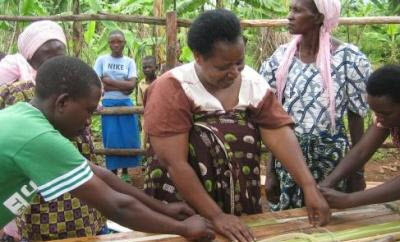
Women work banana fibre, which can be used to make cheap and sustainable sanitary pads.
It is a widespread but unacknowledged problem that girls in Africa miss school and stay at home because of menstruation. According to UNICEF, one in ten schoolgirls in Africa miss classes or drop out completely due to their period, and substitute pads or tampons for less safe and less absorbent materials such as rags, newspaper or bark.
There are many aspects that link girls’ attendance rates to their menstrual cycles. Firstly, the lack of affordable sanitary products and facilities for girls and women keeps them at a disadvantage in terms of education when they are young and prevents their mobility and productivity as women. Secondly, the lack of clean and healthy sanitation such as toilets and running water means that girls often do not have anywhere to change or dispose of pads safely and in privacy at school. Thirdly, the taboo nature of menstruation prevents girls and their communities from talking about and addressing the problem; raising awareness and education to eliminate the stigma of menstruation is a large part of the battle.
Dropping out
UNICEF reports that “in countries where menstrual hygiene is taboo, girls in puberty are typically absent for 20% of the school year”. Most girls drop out at around 11 to 12-years-old, and miss school not simply because they fear being teased by their classmates if they show stains from their period, but also because they are not educated about their periods, and their need for safe and clean facilities is not prioritised. The idea that monthly bleeding is something shameful, polluting, or taboo may also encourage girls to avoid social contact during their period. Additionally, the cultural implications of menstruation as a stage in a woman’s development may be used to take girls out of school – the idea being that if a girl is ready for motherhood, then she is ready for marriage.
In parts of sub-Saharan Africa, where enrolment rates are among the lowest in the world, the pressure on girls to drop out around puberty is particularly strong. Menstruation is a reason for dropping out that can be added to the potential threat of sexual harassment from male teachers as girls develop. In either case, the result is girls lagging behind with schoolwork and performing badly.
Improvements in sanitation can go a long way to combating the problem. In particular, building toilets in schools enables girls to manage their periods more easily. UNICEF’s attempts to provide “girl-friendly” schools with clean toilets with running water have met with significant improvements in girls’ education. According to the New York Times, “in Guinea, enrollment rates for girls from 1997 to 2002 jumped 17% after improvements in school sanitation, according to a recent Unicef report. The dropout rate among girls fell by an even bigger percentage”. In Guinea, Nigeria and Ethiopia, the instalment of thousands of toilets, training of teachers and introduction of school health clubs have shown substantial gains in enrolment rates for girls and a fall in their dropout rates.
South African promises
Steps have also been taken to address the needs for sanitary care in South Africa. In February this year, President Jacob Zuma acknowledged the need for pads in schools with a proposal that free sanitary towels should be provided to schoolgirls, although the details of this plan remain unclear.
At Mary Waters school in Joza, South Africa, where the $2 price of a packet of sanitary pads is out of the reach of many families, teacher Faith Coetzee has tried to combat the problem by having a stockpile of pads in the school that she funds herself. Alongside this, she hopes that establishing an education programme for girls aged 12-13 will encourage an open environment for discussing periods and how to manage them.
But simply providing pads does not solve the problem. Schools need places to put discarded pads, and the school is currently waiting for government distribution of sanitary towel bins. Coetzee makes the point that unlike condoms, which are free and easily available in school bathrooms and clinics, pads, tampons and other menstruation methods remain unaffordable and inaccessible for girls and women. While most people are able to make a choice about having sex, no girl can ignore or avoid the onset of menstruation.
Enter the corporations
Unsurprisingly, some corporate giants have dipped their toes into addressing the problem. Procter & Gamble, the owner of Tampax and Always, launched the campaign Protecting Futures in 2007 to provide girls in developing countries with sanitary care. Their project includes building toilets and installing incinerators as well as educating teachers and distributing free sanitary pads, acknowledging the critical fact that pads are no use if girls do not have private places to change or dispose of them safely. After starting the project in Kenya in 2006, they have expanded into Namibia and South Africa, and have installed clean water pipelines as well as a Health, Hygiene and Puberty education programme. According to P&G, Protecting Futures has reached 80,000 girls in Africa so far.
Despite the fact that these ventures sound promising, it is difficult to assess whether this is the right approach. For one thing, pads and tampons are expensive, and although P&G’s efforts have reached thousands of girls, their efforts alone cannot provide a sustainable solution to the lack of affordable products. Secondly, the waste they create is harmful for the environment, particularly as many African countries have poor waste networks and facilities. Lastly, there is a tension here between the fact that these supplies are badly needed and that these girls and women are forced to rely on a profit-driven corporate approach. P&G receive lower tariffs for their products from the Kenyan government – good for this project, but presumably with a view to opening trade in other areas with other products. There remains the contention that providing pads to African women and girls is merely exporting a Western culture of waste and overconsumption, which is neither sustainable nor desirable.
Rwanda’s pad eco-system
In East Africa, a new exciting project combines sustainable enterprise, employment, and education to address the lack of affordable and environmentally-friendly sanitary care. Unimpressed by the results of hand-outs, Elizabeth Scharpf has set up in Rwanda what she hopes will be an ‘eco-system’ for the local economy to tackle women’s sanitary needs once and for all. 18% of Rwandan girls miss, on average, 35 days of school every year due to ineffective methods for dealing with periods and the fear of embarrassment. The lack of education about periods is pervasive. Sharpf has been asked the same questions about periods by 35-year-old and young girls: what is happening to me, and why?
Helped by UNICEF, Scharpf has set up the Sustainable Health Enterprise (SHE) to combat the issue including through making eco-friendly pads from the use of banana fibre. The fibre is an absorbent material made from the trunk of the banana tree that is routinely chopped down after each harvest, and so is both eco-friendly and efficient. As well as providing employment for local men and women through the manufacture and sale of the pads, she is spreading information about periods via the sale of the products by health workers, and building safe and clean toilets. Scharpf, whose driving goal is to “equalize the playing field in terms of access to opportunity“, hopes to reach a million women with the SHE program.
As Scharpf says in an interview, “menstruation is one of those things that people don’t really want to have anything to do with“, and that most of the population is “left hanging after donation supplies run out”. Sharpf was helped by the fact that Rwanda is small, had existing networks of community health workers and women’s groups, and business-friendly policies – an unusually beneficial combination in East Africa.
In terms of establishing the large-scale infrastructure needed for sanitation, addressing the obstacles to girls’ education is a monumental challenge that needs to be met, requiring substantial research, resources and attention, not least from the governments in charge. Although the focus here has been on schoolgirls, the same issues apply for women, and unless this problem receives a higher profile, both girls and women will continue to be held back by something out of their control.
Mark Kaigwa is a 23-year-old Nairobi-based creative director/ filmmaker/ entrepreneur/ startup founder/ digital marketer/ speaker/ advisor & thought leader who has co-written an award-winning videogame for Warner Bros, led acclaimed animation workshops and worked with agencies, brands and small & medium sized businesses across Africa to build and sustain value from online communities. As a blogger for Memeburn, Afrinnovator and African Digital Art he caught my eye a while ago, so I was super excited to catch up with him recently and find out all I could about his unusual multi-tasking abilities…
Can you give us an overview of your projects and work?
I am part of some African blogs including Afrinnovator, AfricanDigitalArt and mark: my words (my own). Right now I’m changing up things a little career-wise, so I got some things I can chat about and a few others that I can’t. Not for a few weeks at least.
Can social media revolutionise Africa?
Not on its own. In and of itself it’s just the means, and it’s what we do with it that can revolutionise Africa. Across Africa and other emerging markets, social media is the #1 way people spend time on the internet, especially the mobile web as opposed to search which is #1 in developed countries. This shows how much root it has taken with Africans and coupled with the mobile phone, Africa is writing a new chapter of history for the innovation across the world.
Do you think that great education is a prerequisite for the effectiveness of social media or do you rather think that new media are such strong players in themselves, that they can overcome poor education or even the lack of it?
I think new media disrupts the old ways of education, but doesn’t replace it. It helps if one has the foundations and principles of good communication and understanding how human beings interact and participate in media. The democratisation of information is great, but then again with information overload and cognitive surplus, it’s as much where you look as what you look at. The mobile phone again offers new possibilities for education. Towards the future we could expect a shift from one laptop per child to one smartphone per child.
How did you become interested in media in the first place and where do you think their appeal lies?
My upbringing saw me interact within a family that celebrated and appreciated the arts, which isn’t common in Kenya. My aunt is an actress and my uncle a sculptor. My mother is an interior designer and these have always been strong influences on me. Besides that appreciating theatre and performance as well as good communication led me to naturally incline towards media. The appeal of media is getting a conversation going and not just passing a message from one person to the other but tapping into new networks of people to do this at a pace and with an impact not witnessed by previous generations.
You have quite a career in animation, advertising and communication consulting. I was wondering, what have you studied and have you found it useful for your subsequent path?
I studied a number of things in very different learning environments. Business Information Technology and a course in Mobile Programming at Strathmore University in Nairobi, Leadership and Youth Ministry at an Institute in the United States and most recently learning business in a business acccelerator program as part of the Fellowship program at The Sinapis Group.
You mention amongst other Strathmore, which is a private university in Nairobi. Do you feel you would have had the same chances had you gone to a public school?
This is difficult to say. Private university allows you to begin studies as early as 3 months after you finish high school as opposed to 9 months to a year before you get into public university. My parents didn’t want me hanging around, but regardless I think I think the point in time I was at in my life and the environment I got into right after school shaped a large part of who I am today.
Do you need inspiration, do you believe in it or do you perhaps think it is an overrated concept?
I believe in renewal and inspiration as part of that process, I spend a lot of time online reading and going through content from great curators and online sources and that has become part of how I renew my mind. I also believe that inspiration is at times a blank page. I think some of my best ideas come not at the keyboard, but at my Moleskine notebook.
How are great (or even revolutionary) ideas born?
From threads of thought, correlated or not, threads of thought weaved and stitched together by sharing and openly discussing, critiquing and experimenting with the strands. I think the best ideas are those that are shared and spread among people. This is the genesis of a great idea.
What do you think is lacking nowadays in the advertising/ visual communication world (if anything)?
I’d say it differs from place to place. Globally we’re seeing the new dimension of narrative and storytelling picking up and taking over from traditional static advertising. Participation is a key theme in how messages come across and this is a trend seen most recently in some of the big winners at Cannes this year. Closer to home, Africa’s been looking at a crystal ball of what’s going on globally and South Africa’s the hotbed of creative talent and putting award-winning work on the world stage. Kenya’s got some ways to go, but don’t get me started on that.
Although I don’t know your exact age I can tell from your websites that you have been active in the world of online media and communication for quite a while. How have seen their impact and that of the internet in general in Africa alter over the years (if at all)?
I’m 23 years old but I’ve had a very different career path. I started working early when I got selected to write Warner Bros. first (and only) African videogame Pamoja Mtaani. I’ve been lucky enough to also travel a whole lot and experience learning and cultures across the world. One thing I’m certain of is that Africa’s been changing over the past few years.
You are involved with the website AfricanDigitalArt.com among many things. How important do you think are platforms like ADA, which are clearly built on Western models of communication for emerging African artists?
The thing about the way people perceive the internet and what it holds is not as something that comes from the web or from anywhere but more as a sandbox. Historically, it did come from the West, but no one views it this way. With AfricanDigitalArt.com there’s such an amazing creative class of African professionals across the continent and the world and for them to have a place to convene, create and collaborate is amazing.
Do you see contemporary African (or Kenyan in particular) art reflecting social and political realities more perhaps than “Western” conceptual art? What can contemporary Kenyan artists offer to the country through their work?
Africa’s rich history of textiles, craftsmanship and culture blend in to give a source of inspiration like no other place on earth. With this, as artists are indeed reflect popular culture and local reality you have styles, artists and techniques that emerge as a result. Both in contemporary art and in traditional art. I think Kenyan artists offer up a voice and rich critique.
Do you have any favourite artists? If I wanted to get a sense of what’s going on artistically at the moment in Nairobi where would I have to start?
I noticed on your facebook, in the “About me” section you mention: Changing the way the world views Africa. What do you want to change about the world views Africa? What are some of the greatest misconceptions you feel?
I think the African narrative has been more of an image and less of a conversation or dialogue and I’m passionate about changing this. There’s more to Africa than lions, war and diamonds. In the years to come the world will be looking to Africa to learn about using the mobile web for innovation in community, culture and commerce.
How many hours per day do you spend online? Are you happy with the amount of time you invest in the virtual world or do you occasionally fantasise about disappearing somewhere remote where no new media can get hold of you?
8-10 hours a day, even more sometimes or less. It’s been one of the biggest things in my career, thanks in large part to Twitter which I’ve been on for 4 years. I’ve travelled the world because of it and have met some brilliant people as a result. I’m dependent on the web but I’m glad to unplug and get off the grid from time to time.
What do you think is the greatest social media website so far and why?
Social Network, hard to argue with Facebook. It very well could be the internet as we know it in a few years.
Can you share with us some future projects that you are currently developing?
After inviting Zimbabwean farmers to Nigeria, agriculture in Kwara state has been revived. Will the lessons be heeded by the federal government?
Seven years ago, then governor of Kwara State Bukola Saraki made a headline-grabbing move: he offered a new life in Nigeria to 13 white Zimbabwean farmers. Saraki wanted to combine the farmers’ expertise with a public-private partnership and using the state as an “active development agent” to reignite an ailing agricultural sector. Last month, at Chatham House in London, Saraki outlined how the national government could look to Kwara’s successes to gain a “competitive edge from the comparative advantage” Nigeria has in agriculture and reach self-sufficiency in food by 2015.
While some 70% of Nigerians engage in farming, about 70% of Nigerians are estimated to live in poverty, overwhelmingly concentrated in rural areas. Currently, 34% of Nigerians can not attain sufficient calories even if they spend all their income on food. For many local farmers, access to credit to buy mechanical equipment is unavailable due to banks preferring trade financing or cannot be accessed due to illiteracy. And when farmers produce a surplus, lack of infrastructure and storage facilities can prevent the sale of crops.
To reach poverty reduction targets will necessitate more state involvement in agriculture and a move away from polices labelled “inconsistent, uncoordinated and ad hoc”. While agriculture growth rates have increased since 2000 in line with a government drive, growth has come from the unsustainable expansion of the area of land under cultivation and has failed to impact on the lives of the poor. Saraki hopes catalysing a Nigeria-wide agriculture boom will avert a pattern familiar to African states: declining yields, shrinking farms, stagnant technology and low investment in agricultural research, framed by a lack of state investment and support. A prime concern is eradicating the annual $4 billion food bill Nigeria faces for its food imports. “The first priority must be to produce what we consume,” said Saraki. “Nigeria doesn’t have any business importing food items, given our huge agricultural potential. But to move from mere potential to the desired result, we need to modernize farming, scale up, add value and see agriculture as business, not just a means of survival.”
From post-independence plenty to policy failures
Until the 1970s agricultural exports were at the heart of the Nigerian economy. After the discovery of oil and an accompanying policy shift towards encouraging industrialisation, investment in agriculture dropped off. Nigerian economic growth exceeded 7% a year at the time, and better management of oil revenue – stockpiling foreign exchange reserves and paying off foreign debt – would haveleft more capital available for investment in agriculture.Domestic food prices rose through the decade, while food crop production fell and the growth rate for export crops plummeted: Nigerian agriculture suffered from an “extraordinary decline” from 1970 to 1982.
A series of failed policy attempts followed under successive heads of state – Gowon, Obasanjo, Shagari, Buhari and Babangida – wasted billions of Naira with no tangible improvements to the sector or the rural poor.
A failure to boost productivity exacerbated high labour costs. A lack of positive production incentives for export crops was followed by subsidies not being enough to offset the effects of the oil boom and trade and exchange rate policies. As Goodluck Jonathan recently acknowledged: “We had Operation Feed the Nation (OFN), we had Green Revolution and yet we are still importing rice.” Recent strategies such as the New Agricultural Policy of 2001 address the link between agriculture and poverty reduction, but are criticised for leaving “grey areas”, and noted for their lack of monitoring and evaluation.
Enter the Zimbabweans – Shonga
When Saraki came into office in 2003 he wanted to use agriculture to tackle the entrenched poverty in Kwara. While 75% of land in Kwara is cultivatable, at the time only 11% was under cultivation. Saraki’s first attempt at harnessing the state’s untapped potential was through “Back-To-Farm”. The state gave out money to farmers to prepare land, and provided seedlings, chemicals and fertilisers. The project failed: Saraki argues that the majority of farmers were old and lacked education – hampering access to credit – were reluctant to use fertilisers, saw money handouts as a “dividend of democracy” and lacked the commitment to pay back money or justify it through results, while the agriculture ministry that oversaw the project lacked the necessary training and experience. “We realised a fundamental mistake we made: we tried to mount a new carriage on an old horse that was also ill,” he said.
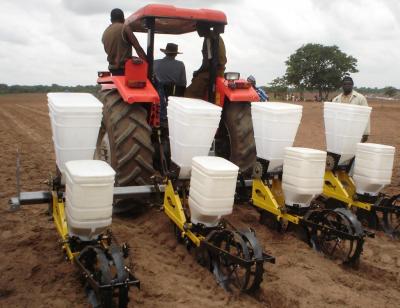
Saraki turned to commercial farming. He created Shonga Farms as a “Special Purpose Vehicle” in order to gain financing from five banks through debt and equity financing options. He made contact with the Commercial Farmers Union of Zimbabwe – by 2004 a memorandum of understanding had been signed, and by 2005, after the state stepped in to clear land and provide fertilisers and insecticides,13 Zimbabwean farmers were running five dairy, four poultry and four mixed farms in the new Shonga project, each with 1,000 hectares of land under a 25-year renewable lease.
The impact of the farmers was transformative. The ‘Shonga’ farms now employ up to 4,000 people at harvest time. Crops include maize, soya beans, rice, peas, bananas, ginger and pineapples, and crop yields are increasing every year: rice yields are more than double the national average of 1.5 tonnes per hectare, maize, at 5 tonnes per hectare far exceeds the national average of 1.2, while on what is now Nigeria’s largest cassava farm 40 to 60 tonnes per hectare of crop are produced a year, as compared to the national average of 12 to 15 tonnes. Such is the success of the cassava farm that Nigerian Starch Mills is currently building a processing factory nearby. Shonga is home to a factory which is Nigeria’s largest exporter of processed cashew nuts and the largest milk producing dairy farm of its kind in the country. Climate-controlled poultry houses are under construction, along with a N2.9 billion (about $1.8 million) irrigation project which will increase the yields of the two-thirds of farmland not currently irrigated.
The changes have been noticed by locals. An elder from a village in the Shonga farms said in 2009: “We now have electricity, our health is improving because we have a new clinic and water, some of our sons and wives have found work on the farms.” And a critical element of the project is ensuring that local Nigerians can continue the work of the Zimbabweans – as Saraki has noted, young Nigerians are not attracted by a profession which failed to lift their parents from poverty: the Malete Integrated Youth Farm Centre was established in order to ensure that new cohorts of Nigerian graduates are trained in modern farming techniques.
From regional experiment to national model: the need for the state
“The future of Africa depends on the capacity to create jobs and prosperity,” Saraki said at Chatham House. In Nigeria, this prosperity cannot be created without attending to the needs of agriculture. Domestic production will lower food prices and boost domestic demand, while increases in productivity will free up labour for non-agricultural employment and create a surplus for the industries needed for Nigeria’s next stage of growth.
State-led agricultural development pushed some East and Southeast Asian countries from being poorer than sub-Saharan Africa 50 years ago to far richer now. Added value in – largely smallholder – Taiwanese agriculture doubled in the 25 years to 1938 fuelled by technological change from investments by colonial power Japan in rice varieties, fertilisers, irrigation and infrastructure. While a range of other factors – including Cold War aid disbursement, colonial and post-colonial education policy, export orientation and technocratic expertise – propelled Taiwan’s phenomenal economic development and shift to a technology-intensive economy, agricultural development was the foundation.
While issues like the continued provision of subsidies to European farmers through the Common Agricultural Policy remain problematic and out of Nigeria’s control, state spending on agriculture must increase: government funding has been equivalent to the amount spent on building a road from Abuja to its airport. Government policy is crucial for the provision of rural infrastructure, research and a reliable rural power supply. Monetary policies must combat the negative impact on agriculture of high inflation and high interest rates and the phenomenon of “Dutch Disease” – the negative impact an appreciating exchange rate caused by oil can have on non-resource based sectors.And the returns from investment in agriculture are better than might be expected: some subsectors of agriculture in Nigeria such as cattle, fruit and vegetables outperform oil and manufacturing sectors in terms of return to investment, while “technological improvements related to unskilled labor produced the highest returns in agriculture compared to any other sector”.
“As a country we have not focused on agriculture,” says Saraki. “As a government, we need to provide an enabling environment.
“It’s the know-how, desire and commitment that made it [the Shonga project] work. But these 13 farmers alone cannot feed Nigeria. We must try and see if we can stimulate the whole country. Today we produce 2.2 million barrel of oil. Even if we produce 10 million barrels of oil, it will not necessarily fight poverty.”
In 2005, Saraki said: “Kwara will be the backbone for Nigeria’s agricultural drive.”And as he outlined in London, after coming into power Saraki aimed to make the local state an “active development agent”. In order for Nigeria as a whole to reap the benefits of its comparative advantage in agriculture and take the rural population from poverty to prosperity, Goodluck Jonathan will have to do much the same with the national state.
Mubarak’s downfall has proved a mixed blessing for Egypt’s persecuted Christian minority.
By Menelaos Agaloglou
Egypt:
The treatment of Copts – Egypt’s Christian minority – was described in 2010 as “akin to apartheid”. Several months after the ousting of President Mubarak sectarian violence is now escalating, and the Coptic community faces the threat of rising Islamism.
Discrimination against Copts is on the rise. Throughout Egypt there are reports of religiously motivated killings and the abduction of Coptic girls, who face rape and forcible conversion to Islam and marriages to Muslim men. Several Copts I talked to in Egypt believe that these atrocities are part of a secret campaign to end Christianity in the Middle East.
“It is not our fault we were born here”
Meanwhile, the Copts are being systematically excluded from the political system of Egypt. Out of 444 representatives, Egypt’s parliament has just two Copts. The government-subsidised media is openly anti-Christian. I heard recurring reports of discrimination in housing, while many colleges around the country limit the enrollment of Copts to a quota of 2%, although Christians make up 10 – 15% of the population. Copts are excluded from high-ranking jobs in the police, security agencies, politics and academia. ‘Hajji’, a young Copt from Cairo, told Think Africa Press that although he is well-educated he cannot find a job because of his religion, and although he uses a fake Muslim name his ID card reveals his beliefs. His community has suffered from violent attacks, which he believes have become worse since the ‘revolution’. “I am afraid of the [Muslim] Brotherhood,” he says. “If they come we need to leave the country. It is not our fault that we were born in this place.”
Muslims who convert to Christianity face imprisonment and torture. I met one of these converts, who wanted to remain unnamed. He claims that he converted to Christianity after secretly reading the Bible without his parent’s knowledge. Now he is afraid of how they will react. He wants to leave the country because he is afraid for his security, and he assures me that there are thousands of young men in the country who convert to Christianity. These young crypto-Christians share their views and anxieties on the internet, but they cannot change their ID, which states their religion. Conversely, Christians who want to become Muslims are received with open arms by the authorities.
Copts have not prospered in Egypt’s modern history. Nasser’s pan-Arab policies undermined the Copts’ strong attachment to their Egyptian and non-Arab identity. Sadat, Nasser’s successor, sent the Patriarch of Alexandria, the head of the Coptic Orthodox Church, into internal exile. Mubarak has been accused by many of failing to protect the Christian minority. Current laws make it difficult for Copts to build Churches and official permission is required even to repair existing ones. Mixed marriages are not allowed. The Pew Research Center’s forum on religion found in 2009 that Mubarak’s Egypt – alongside Iran, Indonesia and Pakistan – was amongst the 25 most populated countries with severe restrictions on freedom of religion.
The revolution and its discontents
Yet, although the majority of the Copts supported the revolution they have found themselves worse off than before. Violent attacks against them have increased, extremists have become more vocal, and the state is unwilling or unable to protect their lives and property. Dr Sherif Doss of the International Coptic Council told Think Africa Press that violence has increased after the revolution and that there is inefficient security in areas where Copts live. He blamed the violence on Salafis who appear to have used the revolution as an opportunity “to escalate their attacks and propaganda of hatred” against Christians. Dr Sherif stated that the government refuses to impose laws that would protect churches and refuse the civil rights of non-Muslims. “There is no law against discrimination,” he said. “We have asked for such a law for more than 30 years now. After the revolution things have become even worse because we do not have the minimal security which we used to have.”
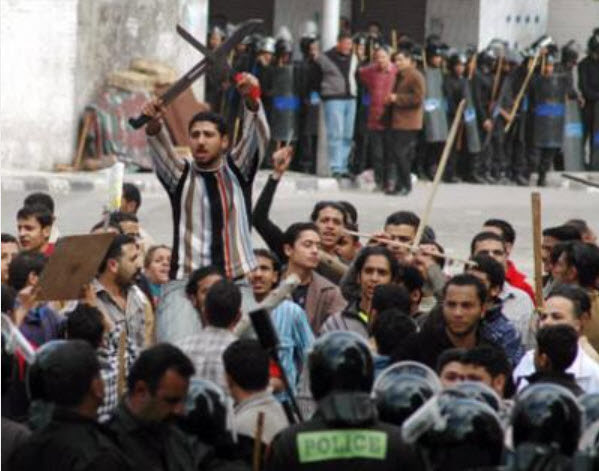
On May 7, sectarian violence escalated as 12 people were killed in the poor suburb of Imbaba, in Cairo. The bloodshed started when rumours spread around the neighborhood that a Christian woman who had converted to Islam had been abducted, and was being kept in the Virgin Mary Church against her will. About 500 Salafis gathered at the church. Gunshots and an exchange of Molotov bombs followed, resulting in the burning of two churches. The next day I visited the area and I spoke with some Copts living there. They blamed the government for failing to bring justice to its Christian citizens. Local shopkeeper Theodoros said: “If the government had punished the perpetrators of violence before now we would not have this problem.”
The next day I had the opportunity to listen to Dr Naquib, the chairman of the Egyptian Organization for Human Rights, talking to foreign and local journalists. He warned both Christians and Muslims to take action against what happened the previous day in Imbada, pointing to the ‘hatred propaganda’ on display in local media and on the internet against the Christians. The slogan ‘Punish the Christian/Unbeliever’ was commonly heard. Dr Naquib says that although the Copts had supported the revolution, they are currently turning against it. “We suffer from persecution and terrorism, but up to when?” He demands constitutional protection, and says international attention must focus on the problems of the Copts “before it is too late”. The International Coptic Council demands the separation of religion and the state, and the abolishment of Article 2 of the Egyptian constitution which states that the religion of Egypt is Islam.
Who to blame?
Many people blame the increase in violence after the revolution on remaining elements of Mubarak’s government, who are manipulating Salafi violence as a ploy to portray the revolution as destabilising. Others blame the general lawlessness in the country, and believe that after the upcoming elections order will be re-established by a civilian government. Another popular suspicion is that Saudi Arabia is backing Salafi groups in order to undermine the Egyptian revolution and the wider Arab spring – the dictators of the Arab world would be eager to see the Egyptian revolution fall prey to sectarianism and extremism. On the other hand, some see no conspiracy behind the violence, only old tensions. While interviewing a priest in the Mar Girgis area of Cairo, I am told there is a lot of hatred between the two religions in Egypt. “There is no respect for Christians here, the majority thinks we are pagans.” But he claimed that Mubarak, like his predecessors, was able to enforce the law and protect them. Now that Mubarak is gone and many prisoners of the Muslim Brotherhood are free, Christians around Egypt are afraid for their lives and for the lives of their children. “If the Muslim Brotherhood comes to power we would be lucky if we manage to escape.”
Egypt could have a chance for democracy if a civilian leader like El Baradei or Amr Mousa comes to power in the elections, scheduled for September. On the other hand, if the vacuum of power is filled with Islamic movements the Copts should demand international protection from the UN, the EU and the US. The international community should pay close attention to Egypt before it is too late. All moderate Egyptians should stand united against this new enemy. In the same way that Christians and Muslims united against Mubarak and his regime, they must unite against their new and even more dangerous enemies: sectarianism and extremism.
On the border with Egypt refugees from sub-Saharan Africa tell of racism, rape, mercenaries, and a war waged by foreign Islamists.
By Menelaos Agaloglou
Saloum, Libya:
(This is the second of a two-part report from Libya)
Refugees from the war in Libya have gathered in the border region with Egypt. The stories that I hear from them stand in stark contrast to the stories told in Benghazi.
Libya has a long history of racism. The country was part of the slave trade until 1930, and under Italian colonialism Libyans saw themselves as Mediterranean and superior to ‘blacks’. Gaddafi’s pan-African policy has outraged many Libyans who see their resources being used for people they never meet and have no natural affiliation with. The arrival of thousands of Africans to work in Libya, mainly in the oil sector and in factories, has increased the anger of locals. Muslim Libyans were never happy with the arrival of black African Christians who they accuse of bringing prostitution, crime and drugs to their country. In 2000 this anger exploded into a pogrom against the sub-Saharan migrant population. At the time Libyans were hoping not only to eject black Africans from the country, but to also snuff out the pan-African policy of Gaddafi, which in reality can be argued to be more like an Arab approach to colonialism rather than real support for sub-Saharan African countries. Currently, Gaddafi is using black mercenaries to suppress the rebellion. As a result hundreds of black Africans living in the east of Libya have been attacked by rebels who accuse them of being pro-Gaddafi.
Tales from the camps
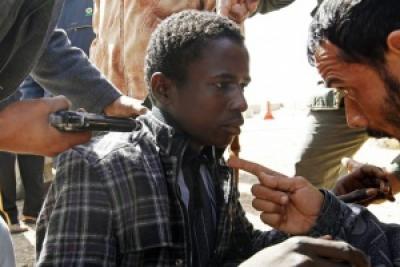
The day I visit the refugee camps in Saloum there are around 2,000 refugees. Most of them are from the well known trouble-spots of Africa. They complain because they miss their old, good life in Libya. Now they face water shortages and are given only two meals per day. Many complain about the quality of food and the sanitation standards in the camps. Almost all use phrases such as “in Libya we had a life”, “Gaddafi welcomed us as Africans” and “we were respected”. They tell me of atrocities including rapes and massacres perpetrated by the rebels against Africans in Libya. A Turkish oil worker who escaped Libya told of the murder of 70 to 80 Sudanese and Chadian workers with axes by Libyans who accused them of being mercenaries.
Alexander is from Eritrea. He cannot return to his home. He worked for three years in a construction company as a civil engineer, and enjoyed the comfort of his salary and his life in Libya. He believes that the people of Libya do not like black people, even black Libyans. “Gaddafi used blacks for everything. Now that we are out, the country will stop operating,” he says. He says many people are still missing and that he witnessed the killing of 24 people from Chad when they left Benghazi for Egypt. Even though he left behind part of his income, he is not willing to go back to Libya. He is angry with the international community because he says they have left refugees sleeping in open tents without proper sanitation or nutrition.
Azab is also from Eritrea. She tells me she cannot understand why “this mess” happened. “Libyans had a permanent salary, they were free to travel and the government provided cheap houses and cheap cars for them. Why are they doing this? They were not allowed to speak about politics and they should respect this.” Another refugee, Mohammed, is from Niger. He worked in Misrata as a company driver. “There was no protection in Misrata after the conflict started and the rebels did not pay our salaries” he says. He tells me that the rebels stole around 10,000 Libyan Dinars (about $5,700) from him.
Saffar Hamid is from Darfur, in Sudan. His village was burned down and he became a refugee seeking safety and work in Libya eight years ago. “Before problems started in Libya, the country was safe. We were working with a high salary and we were able to support our people back home,” he says. After the rebellion began he says his skin color became a problem. He is angry because he cannot go back to Sudan. “If we return we would be killed or sent to prison,” he says. “People have nothing back there, all our animals were taken by the Janjaweed.” He says that now in Libya it is also unsafe for him because the rebels take people from their houses and accuse them of being mercenaries. He tells me that in Al Bayda there were 100 Sudanese men working as herders who the rebels captured and forced to be photographed. He explains that the situation in Benghazi is not serving anyone’s interest. “In Benghazi,” he says, “even children had weapons and they could kill you.” Other Sudanese refugees sitting nearby tell me about the rape of a 12-year-old Sudanese girl by the rebels.
Islamists and the arms trade
A Somali tells me that he believes that the international community is wrong in helping the rebels and that they will understand this only when it is too late. He claims that in the last days before he left for the border he noticed foreign Islamic militants. “The revolution is not perpetrated by innocent people,” he says. “This was not a civil revolution from the first day. Half of the people fighting in Benghazi were not Libyans. They were hiding the weapons inside the mosques. There is a new element in Benghazi – extremism, and that is why they changed all the Imams.” Several refugees who I speak to argue that there are divisions inside the rebel movement. They say there are two forces, the youth, who want freedom and elections, and extremist Islamic elements who want to take control of the weapons and – subsequently – the movement.
Abdullah, also from Somalia, speaks about the arms trade in Benghazi, arguing it is a war for profit. He says most of the weapons are being bought by Islamists and that the uprising is “chaotic”. “In Benghazi weapons are on sale for 1,200 Dynars (about $988) which have been stolen from the army. Who do you think gives them all this money?” Most of the refugees I meet agree that most Libyans are tired of Gaddafi and his relatives, but that Libyans “do not support the rebels”. Ibrahim, another Somali, tells me that if the rebels succeed instability in the region will also increase, especially in the southern neighbors of Libya: Chad, Niger and even Mali, as they all have militant groups in their desert terrains.
“I will not betray Gaddafi”
In the almost unbearable afternoon heat I visit a tent to talk with more young men from Somalia. Abdullah Mohamed Ali has spent his childhood on the road. He left Somalia when he was two-years-old, and stayed in Sudan for ten years before he reached Libya. Abdullah was educated in Libya and speaks Arabic with a Libyan accent. Abdullah’s eyes cloud when he talks about Libya. “In Libya,” he says, “I had everything, house, salary, TV, laptop, Playstation. I was living like you, the same way you are living in Europe.” He says Gaddafi welcomed many Africans and treated them with respect. He says this is something he will not forget. “I support Gaddafi, he gave me everything. I will not betray him now.” He says he understands why the rebels are fighting black Africans. “Gaddafi gave $100 to Africans who wanted to cross to Europe to kill the rebels. He even gave them houses and residence permits in the western parts of the county.” Other reports suggest mercenaries were paid as much as $10,000 to fight, and that Gaddafi is using children as young as 13 in his army. However, Abdullah says he cannot understand why the war began, as he says Libyans “had everything” and they should respect their leader.
It is true that Libya holds Africa’s largest crude oil reserves and that its oil wealth is spread over a relatively small population which has managed to sustain higher living standards than neighboring countries. Libya has a per capita GDP of $13,000, compared to $9,500 in Tunisia and $6,200 in Egypt. The Somalis I speak to say Libya is a paradise compared to their home country. A Somali named Abubakar says that if NATO did not get involved in the war the rebellion would have lasted only a month. He says the war against Gaddafi is influenced by Western imperial interests and the Western media. As with many others I speak to, he tells of the killings of blacks in Benghazi and the reports of black African girls being raped by rebels. The strories I hear in the refugee camps along the Egyptian border remind us that Arab Libyans are not the only ones suffering in this war.
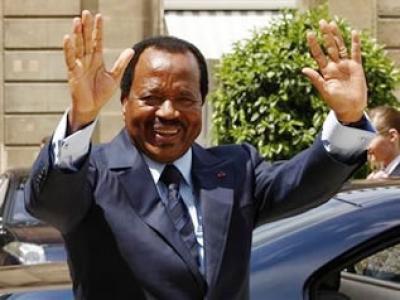 At the 3rd Ordinary CPDM Congress in Yaoundé, a few weeks before yesterday’s chaotic presidential election, Paul Biya defended the 29-year legacy of the ruling party in front of a generation of young Cameroonians. The Republic of Cameroon, he said, is moving from being a country of “great ambitions” to one of “great achievements”.